Ayurvedic Management of Dushta Vrana
DOI:
https://doi.org/10.47070/ijapr.v11i11.2990Keywords:
Dushta vrana, Ulcer, Agada tantra, Vishavilwadi Agada,Abstract
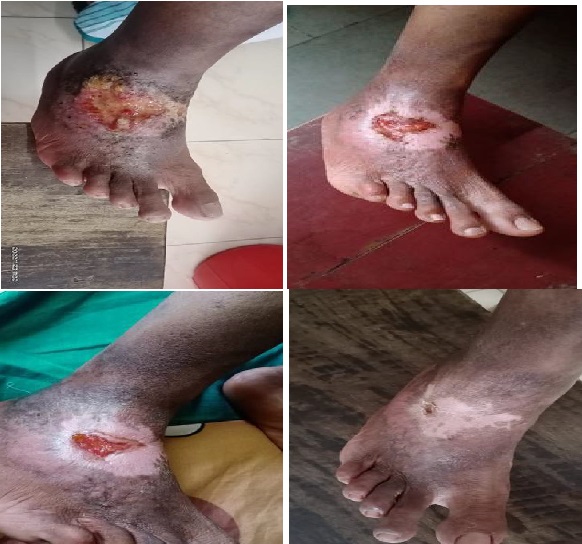
Non-healing ulcers are the most common problem encountered in clinics today. Ulcer is a discontinuity over the skin exhibiting loss of epidermis, dermis, and sometimes subcutaneous fat as well. In Ayurveda, Dushta vrana can be correlated with non-healing ulcers. Acharya Susrutha detailed Dushta Vrana in Chikitsa Sthana. It is characterized by symptoms like Durgandha (foul smell), Vedana (pain), Chirakali (chronicity), Utsangi (elevated), Atipooyasrava (pus discharge), Atigandha Vrana srava, etc. All these features can be observed in non-healing ulcers. This study explores the Ayurvedic management of Dushta vrana using the principles of the Agada Tantra. Methods: Medicines like Kottam thakaradi Kashaya, Parankipattai Tablet, Tarunabhaskaram Gulika, Jeevaraksha Gulika, Nimbadi Kashaya, and Thriphala Guggulu were used in the treatment course along with Virechana and Jalookavacharana. Keraleeya chikitsa grantha, like Prayoga samuchaya and Visha Vaidya jyotsnika, contains too many Yoga that can be used in the management of Dushta vrana. Results: Symptoms were assessed before and after treatment. Discharge, foul smell, pain, numbness, and wound size were considerably reduced. Conclusion: Special Yogas mentioned in the context of Agada Tantra are found to be effective in the management of Dushta vrana.
Downloads